
Increasing sales doesn’t always mean increasing profits. Improving your gross margin—the percentage of revenue remaining after direct costs—is one of the most effective ways to strengthen your business’s financial performance.
Whether you’re a startup or an established small business, optimizing pricing, controlling costs, and improving efficiency can help you generate more profit without significantly increasing sales. This blog covers practical strategies to improve your gross margin and build long-term profitability. Let’s dive in!
How Can You Improve Gross Margin?
Improving gross margin comes down to increasing the value you earn from each sale while controlling the direct costs of delivering your products or services. Common strategies will be discussed in the blog. Small, consistent improvements across several areas often produce a greater impact than one major change.
Not sure where your biggest profit opportunities are? Have a review session with us can help you identify which products, services, or processes are reducing your margins and recommend practical improvements based on your financial data.
Actionable Ways to Improve Gross Margin
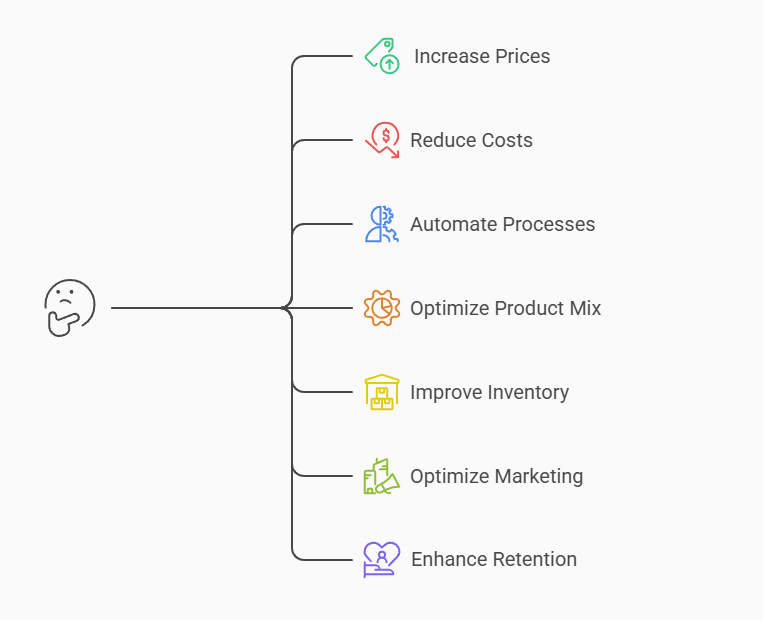
Increase Prices Strategically
Raising prices is often the quickest way to improve margins, but it must be done carefully. Focus on high-value services where customers are willing to pay more. Introduce tiered pricing options that provide choices based on different levels of service. If supplier costs increase, pass those costs to customers rather than absorbing them.
Reduce Direct Costs (COGS)
Lowering costs directly tied to producing your goods or services can significantly impact gross margin. Negotiate better terms with vendors or consider alternative suppliers for cost savings. Reduce waste by improving efficiency in labor, materials, and time management and improving your cash conversion cycle. Streamlining operations and eliminating unnecessary expenses ensures that more revenue is retained.
Automate & Improve Efficiency
Automation and choosing the right business software help cut costs and improve productivity. Using QuickBooks Online for bookkeeping minimizes manual errors and saves time. AI-powered tools can automate scheduling, invoice follow-ups, and customer communication. Standardizing processes with checklists and workflows reduces inefficiencies and ensures consistency in service delivery.
Optimize Your Product or Service Mix
Not all products or services contribute equally to profitability. Identify high-margin offerings and focus on promoting them. Upselling and cross-selling complementary services can increase revenue per transaction. Eliminating low-margin services or products allows businesses to allocate resources more effectively.
Improve Inventory Management
Holding excessive inventory ties up cash flow and increases storage costs. Implement a Just-in-Time (JIT) system to order stock based on actual demand rather than speculation. Identify slow-moving products and run promotions to clear them out. Managing inventory efficiently reduces waste and improves financial flexibility.
Optimize Marketing Spend
Marketing should focus on channels that provide the best return on investment. Analyze which strategies bring in the most profitable customers and allocate budget accordingly. Organic marketing strategies like SEO and social media engagement reduce dependency on expensive paid advertising. Retargeting existing customers is more cost-effective than constantly acquiring new ones.
Improve Customer Retention
Retaining customers is one of the most cost-effective ways to sustain profitability. Providing excellent service encourages repeat business and referrals. Loyalty programs incentivize customers to continue using your services. A strong customer experience builds long-term relationships and stabilizes revenue.
How to Prioritize the Best Action for Your Business
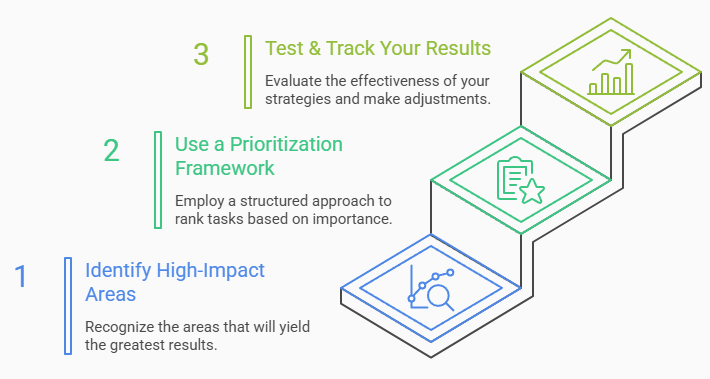
Step 1: Identify High-Impact Areas
Use financial reports in QuickBooks Online to determine where margins are weakest. Identify services or products with low profitability, high costs, or inefficiencies. Focus on areas where small improvements can lead to significant gains.
Step 2: Use a Prioritization Framework
ICE Score (Impact, Confidence, Ease): This method scores potential actions based on three factors: impact on gross margin, confidence in success, and ease of implementation. Each factor is rated on a scale from 1 to 10, and the average score determines priority. High-scoring actions should be implemented first.
Pareto Analysis (80/20 Rule): Focus on actions that yield the most significant results. Often, 20% of efforts drive 80% of improvements. Identify key cost drivers and revenue-generating activities, then allocate resources accordingly.
Eisenhower Matrix (Urgent vs. Important): This framework categorizes tasks based on urgency and importance. Immediate actions should be addressed first, while long-term improvements should be planned. Unimportant tasks that do not affect gross margin should be minimized or eliminated.
Step 3: Test & Track Your Results
After implementing changes, monitor their impact through financial reports. QuickBooks Online provides insights into gross margin trends, allowing businesses to track improvements. A/B testing different pricing models or cost-cutting measures helps determine the most effective strategies. Setting measurable goals, such as increasing gross margin by a specific percentage within a set timeframe, ensures accountability.
Conclusion
By monitoring your financial reports and prioritizing high-impact initiatives, you can build a stronger, more resilient business that generates more profit from every dollar of revenue. Knowing your gross margin is only the first step. The real value comes from understanding what’s driving your costs and identifying opportunities to improve profitability.
Book a free consultation today with us to discover practical ways to increase profitability and strengthen your business.