
Healthy cash flow is essential for growing a successful business. Even profitable companies can run into financial pressure if cash is tied up in inventory or unpaid customer invoices. One of the best ways to measure how efficiently your business manages cash is through the Cash Conversion Cycle (CCC). Understanding this metric can help you improve liquidity, reduce financing needs, and make better financial decisions.
What is the Cash Conversion Cycle (CCC)?
The Cash Conversion Cycle (CCC) is a key metric that measures how long it takes for a business to convert its investments in inventory into cash flows from sales. It helps businesses determine how efficiently they are managing their resources and whether there’s an opportunity to optimize their cash flow. Understanding your CCC is just one part of evaluating your company’s overall financial health.
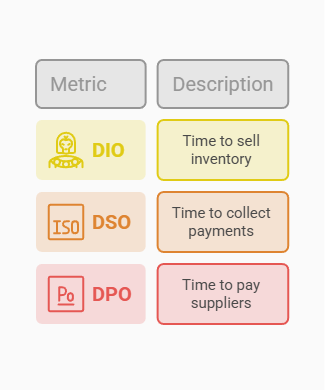
The CCC is made up of three important ratios:
- Days Inventory Outstanding (DIO): How long it takes for a company to sell its inventory.
- Days Sales Outstanding (DSO): How long it takes for a company to collect payments after making a sale.
- Days Payables Outstanding (DPO): How long a company takes to pay its suppliers for goods or services.
Can You Have a Negative Cash Conversion Cycle?
Yes, it is possible to have a negative Cash Conversion Cycle (CCC), and it’s actually a sign of an extremely efficient business model. A negative CCC means that a company is able to sell its products and collect payments from customers before it needs to pay its suppliers. This can significantly improve cash flow and reduce the need for external financing.
For a negative CCC to occur, the company’s Days Inventory Outstanding (DIO) and Days Sales Outstanding (DSO) must be shorter than its Days Payables Outstanding (DPO). Essentially, the business sells products quickly and receives customer payments before it needs to settle its supplier invoices.
Example of Negative CCC:
- DIO = 30 days (the company turns over its inventory quickly)
- DSO = 25 days (the company collects payments from customers quickly)
- DPO = 80 days (the company takes longer to pay its suppliers)
So, the CCC would be: CCC=30+25−80=−25 days
In this case, the company can generate cash from sales before having to pay for its inventory, improving its liquidity. This scenario is common in businesses with significant market power, such as Amazon or Walmart, where they can negotiate favorable terms with suppliers while quickly moving inventory and collecting payments.
However, while a negative CCC can be a good sign of financial efficiency, it’s important to note that it could also indicate aggressive supplier payment terms, which might not always be sustainable in the long run.
If your business is growing but cash always seems tight, the issue may not be sales—it could be your Cash Conversion Cycle. Reviewing your inventory management, receivables, and supplier payment terms with a CPA can help identify practical ways to improve working capital and reduce financing costs.
How to Calculate the Key Ratios
1. Days Inventory Outstanding (DIO)
DIO measures how long inventory sits before it is sold.
- A lower DIO means you’re selling inventory quickly, freeing up cash sooner.
- A higher DIO may indicate slow-moving inventory, excess stock, or inefficient inventory management.
Reducing DIO can improve cash flow by minimizing the amount of money tied up in inventory. Businesses with consistently slow collections often rely on financing to bridge cash flow gaps.
2. Days Sales Outstanding (DSO)
DSO measures how long it takes to collect payment after making a sale.
- A lower DSO means customers are paying promptly, improving cash flow.
- A higher DSO indicates slower collections, which can create cash flow challenges even when sales are strong.
Improving your invoicing and collection processes can help reduce DSO and increase available cash.
3. Days Payables Outstanding (DPO)
DPO measures how long it takes to pay your suppliers.
- A higher DPO allows your business to hold onto cash longer, improving short-term liquidity.
- A lower DPO means you’re paying suppliers more quickly, which may strengthen supplier relationships but reduce available working capital.
The goal is to maximize payment terms without damaging supplier relationships or missing early payment discounts.
Practical Tips to Improve Each Ratio
1. Improving Days Inventory Outstanding (DIO)
- Improve demand forecasting: Predict customer demand more accurately to avoid overstocking.
- Implement just-in-time (JIT) inventory: Order inventory as needed to reduce stock levels.
- Optimize inventory management: Use software tools to automate inventory tracking and reorder processes.
2. Improving Days Sales Outstanding (DSO)
- Shorten payment terms: Encourage quicker payments from customers by offering shorter payment terms.
- Invoice promptly and accurately: Send invoices immediately after a sale, and ensure they are error-free.
- Follow up on overdue accounts: Implement a systematic follow-up process for overdue invoices.
3. Improving Days Payables Outstanding (DPO)
- Negotiate better payment terms: Work with suppliers to extend payment terms.
- Consolidate suppliers: Reduce the number of suppliers to negotiate better terms.
- Improve supplier relationships: Strong relationships can lead to more flexible payment arrangements.
How Financing Can Address Gaps in CCC?
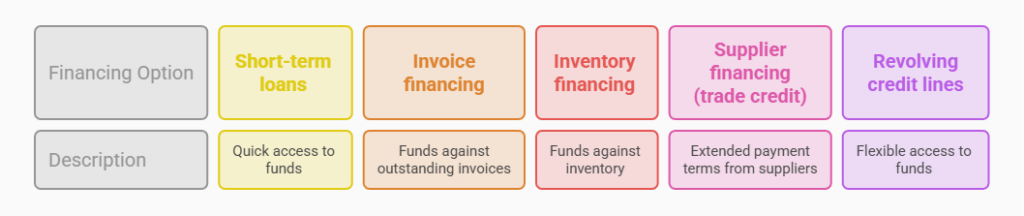
When a company’s CCC is long, financing can help fill the cash flow gaps, ensuring the business has enough working capital to maintain operations while it waits for inventory to sell or receivables to be collected. Financing options such as short-term loans, invoice financing, and inventory financing can help improve liquidity by providing quick access to funds. Additionally, supplier financing (trade credit) and revolving credit lines can help extend payment terms and keep cash flowing, reducing the pressure from a longer CCC. Improving cash flow should also form part of your overall tax and financial strategy.
Conclusion
Your Cash Conversion Cycle is one of the clearest indicators of how efficiently your business manages working capital. Even modest improvements to your DIO, DSO, or DPO can free up cash for hiring, expansion, equipment purchases, or reducing debt.
Better cash flow starts with understanding where your money is tied up. Whether you’re looking to optimize working capital, improve collections, or evaluate financing options, Purpose CPA can help you develop a strategy tailored to your business.