
Canadian small businesses are heading into 2026 facing structural shifts that extend well beyond short-term economic cycles. Labour shortages, ongoing uncertainty, and tighter financial conditions are reshaping how businesses operate, invest, and plan.
This blog covers the most impactful small business trends in Canada for 2026, ordered by their macro-level influence on how businesses are being run.
Maintaining strategic flexibility during market uncertainty
In an uncertain environment, flexibility has real financial value.
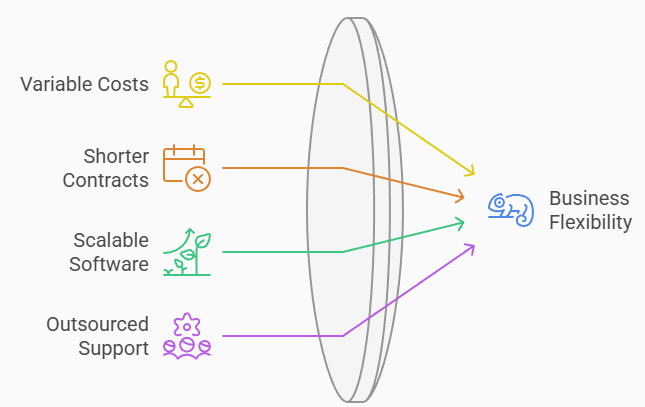
We are seeing more business owners intentionally avoid over-committing to long-term leases, fixed overhead, permanent staffing levels, or rigid technology investments. Instead, many are choosing to pay a modest premium for flexibility — the ability to scale up or down as conditions change.
From a CPA perspective, flexibility shows up in:
- A higher proportion of variable versus fixed costs
- Shorter contractual commitments
- Scalable, subscription-based software
- Strategic use of outsourced or fractional support
Businesses that preserve flexibility are better positioned to manage downside risk while still being able to act quickly when opportunities arise. In 2026, optionality is a competitive advantage.
Labour shortages and changing workforce expectations
Canada’s demographic shift continues to accelerate. Many baby boomers are retiring, and in several sectors there are simply not enough experienced replacement workers.
At the same time, newer workers are seeking:
- Modern, digitally enabled workplaces
- Flexible work arrangements
- Clear systems and processes
- Stability without unnecessary rigidity
From what we see across our client base, businesses relying on manual processes or outdated tools are finding it harder to attract and retain talent. Digital systems are no longer just an efficiency tool — they are increasingly part of an employer’s value proposition.
Cash flow and working capital are top priorities
With tighter lending conditions and ongoing cost pressure, cash remains king.
Business owners are paying closer attention to:
- Their cash-to-cash cycle
- How quickly customers pay
- Inventory and work-in-progress levels
- Access to bank financing or contingency liquidity
We are seeing a clear shift away from profit-only thinking toward cash-aware decision-making. A business can look profitable on paper and still struggle if cash is tied up in the wrong places.
End-to-end digital enablement is no longer optional
Small businesses are steadily moving away from paper files, email-based approvals, and spreadsheets used as informal systems. Instead, they are adopting purpose-built applications to run accounting, payroll, invoicing, scheduling, inventory, and reporting.
From a CPA perspective, this shift matters because:
- Digital workflows reduce errors and rework
- Financial information becomes more timely and reliable
- Owners spend less time on administration and more time on revenue-generating activities
Efficiency is not just about lowering costs — it is about creating capacity and focus within the business.
Cloud-based operations are now the default
Running a business off a single computer or on-premise server is becoming increasingly rare.
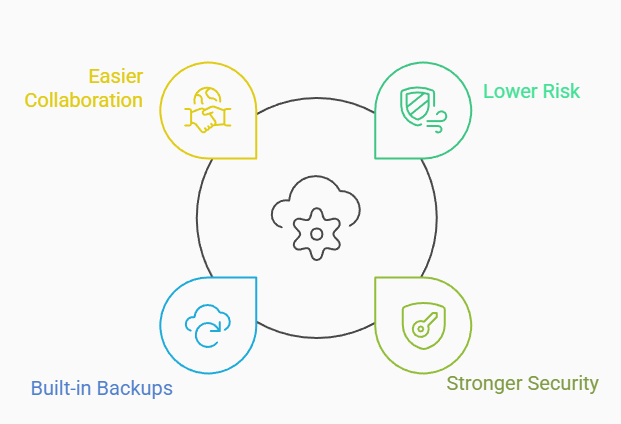
Cloud-based systems offer:
- Lower infrastructure and replacement risk
- Stronger security than most small businesses can achieve internally
- Built-in backups and redundancy
- Easier collaboration with advisors and remote teams
From a risk management and continuity standpoint, cloud systems are often safer, more resilient, and more cost-effective than traditional setups.
Customers are prioritizing value over premium
Customers are still spending, but they are more deliberate. Across many industries, demand is shifting toward offerings that clearly demonstrate value rather than premium positioning alone.
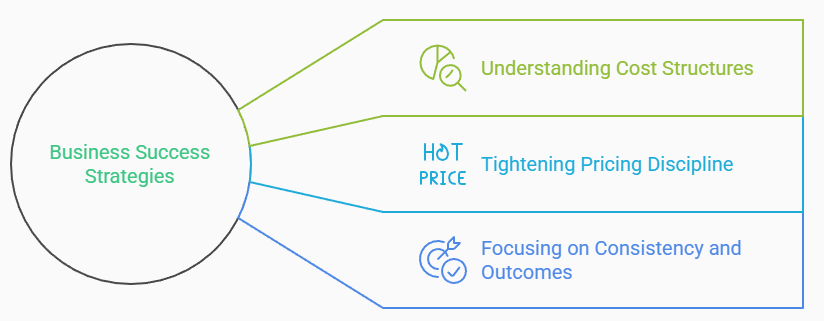
Businesses responding well to this trend are:
- Understanding their true cost structures
- Tightening pricing discipline
- Focusing on consistency and outcomes
From an accounting lens, this trend shows up in margin analysis. Businesses that understand where they actually make money have more flexibility to adapt without eroding profitability.
AI is becoming a practical business tool
AI is no longer experimental for many small businesses. It is being adopted in focused, practical ways to save time and improve clarity.
Common use cases include:
- Research and validation of ideas
- Translation and communication support
- Drafting internal or marketing content
The most effective adopters are not trying to automate everything. They are using AI selectively, with human judgment remaining central to decision-making.
Conclusion
The businesses that perform best in 2026 will not be the ones chasing every new trend. They will be the ones that stay flexible, understand their numbers, manage cash intentionally, and invest in systems that support better decisions. If you are reviewing your cash position, questioning whether your current systems are giving you useful information, or trying to build more flexibility into your cost structure, this is where a CPA’s perspective can add real value.
Contact us today to get a clearer picture of where your business stands heading into 2026 and bring clarity to financial decisions — from cash flow planning and bookkeeping clean-up to ongoing advisory support.