
Claiming eligible business expenses is one of the simplest ways to reduce your tax bill, but not every expense qualifies for a deduction. While costs such as travel, equipment, and vehicle expenses may be deductible, others—like commuting costs, club memberships, and traffic tickets—generally are not. Understanding CRA rules helps you maximize legitimate tax deductions, avoid costly mistakes, and stay compliant.
Which Business Expenses Are Tax-Deductible in Canada?
Many expenses incurred to earn business income are tax-deductible, provided they are reasonable and directly related to your business. Common deductible expenses include business travel, vehicle expenses, meals (subject to limits), legal fees, home office costs, sponsorships, and capital assets through Capital Cost Allowance (CCA). However, expenses such as commuting, traffic tickets, club memberships, and most personal expenses are generally not deductible under CRA rules. Understanding the difference helps reduce your taxable income while staying compliant.
Many business owners either miss legitimate deductions or accidentally claim expenses the CRA doesn’t allow. A proactive tax review can help you maximize deductions while reducing the risk of adjustments or penalties.
Business Travel Expenses
Deductible if directly related to earning business income. This includes:
- Flights, hotels, and transportation for business trips.
- Meals and entertainment, subject to a 50 percent deduction limit.
- Vehicle expenses for business-related travel.
Not Deductible if the expense is personal, such as:
- Commuting between home and your regular workplace.
- Vacations, even if you discuss business during the trip.
Capital Assets
Deductible through capital cost allowance (CCA) over time. This includes:
- Business equipment like computers, machinery, and tools.
- Office furniture, fixtures, and leasehold improvements.
- Vehicles purchased for business use.
Not Deductible as an immediate expense. Instead, the cost is spread over multiple years based on CRA depreciation rates.
Childcare Costs
Not Deductible as a business expense.
- Costs for daycare, babysitters, or nannies are personal expenses.
These expenses may qualify for a personal tax deduction on your T1 return if they allow you to work or run your business.
Clothing
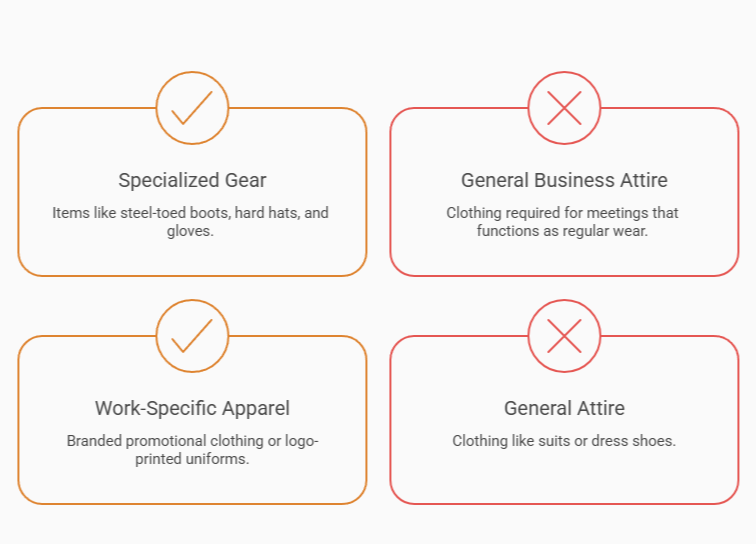
Deductible only if required for work and unsuitable for everyday wear.
- Safety gear, such as steel-toed boots, hard hats, and gloves, is deductible.
- Branded promotional clothing (e.g., logo-printed uniforms) may qualify.
Not Deductible if:
- The clothing is general business attire, even if required for meetings.
- The items can be worn outside of work, such as suits or dress shoes.
Club Memberships
Not Deductible even if used for business networking.
- Gym, golf, and recreational club memberships cannot be claimed as a business expense.
- Professional association fees (e.g., CPA Canada membership) may be deductible if necessary for your work.
Commuting Costs
Not Deductible for regular travel between home and work.
- The cost of gas, parking, transit, and tolls for commuting is considered a personal expense.
- Business-related travel, such as client visits or off-site meetings, may be deductible.
CRA Interest and Penalties
Not Deductible under any circumstances.
- Late payment penalties and interest on overdue taxes cannot be claimed.
- CRA does not allow deductions for failing to meet tax obligations.
Entertainment
Deductible at 50 percent when directly related to business.
- Client meals at restaurants or cafes are partially deductible.
- Event tickets, such as concerts or sporting events, may be deductible if used for client entertainment.
- Business-related hospitality, such as hosting networking events, may qualify.
Not Deductible if:
- The expense is personal or unrelated to generating business income.
- The entertainment is for employees or owners with no business purpose.
Expenses Related to Another Business
Not Deductible under your current business.
- Expenses for a separate business must be allocated to that entity.
- Costs incurred before starting a business may not qualify as deductions.
Home Mortgage or Rent
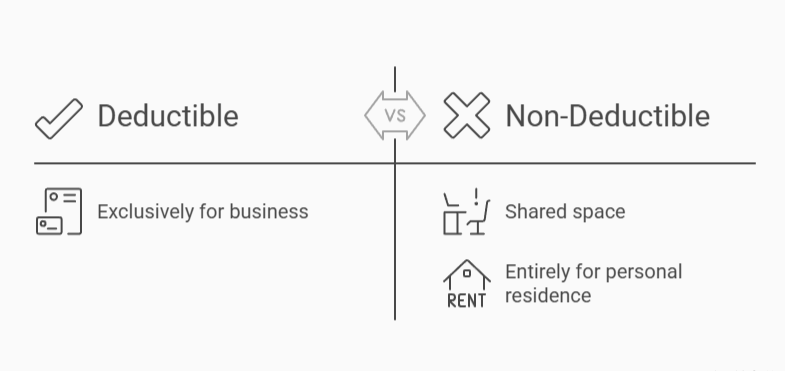
Deductible in proportion to business use.
- If you have a dedicated home office used exclusively for business, a percentage of your rent or mortgage interest may be deductible.
Not Deductible if:
- The space is shared (e.g., a home office that doubles as a guest room).
- The rent or mortgage applies entirely to your personal residence.
Home Renovations
Deductible only if directly related to a home office.
- Repairs and renovations that improve your dedicated business space may be deducted.
Not Deductible if:
- The renovations benefit your personal living space, such as kitchen or bathroom upgrades.
Home Repairs
Deductible if related to a home office.
- Repairs that affect only your business workspace may be deducted.
Not Deductible if:
- The repairs benefit the entire home rather than just the business portion.
Home Utilities, Internet, and Cable
Deductible in proportion to business use.
- A portion of your electricity, heating, water, and internet bills may be deductible.
Not Deductible if:
- The services are used primarily for personal purposes.
- Cable TV expenses, even if occasionally used for business.
Interest on Personal Loans
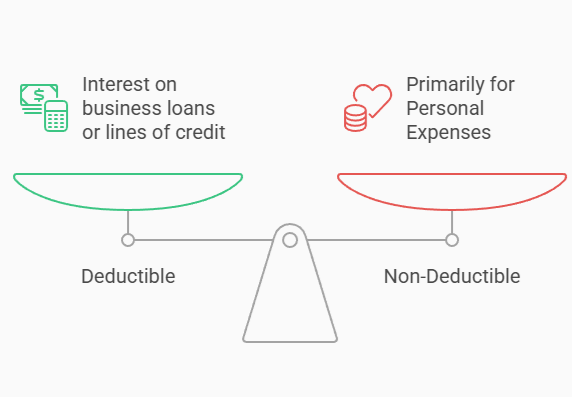
Deductible if the loan is used for business purposes.
- Interest on business loans or lines of credit is deductible.
Not Deductible if:
- The loan is primarily for personal expenses.
Legal Fees
Deductible if directly related to business.
- Costs for drafting contracts, business disputes, or CRA tax audits qualify.
Not Deductible for personal legal matters, such as:
- Divorce, wills, or real estate transactions unrelated to the business.
Life Insurance Premiums
Deductible only if required as collateral for a business loan.
Not Deductible if:
- The policy is a personal life insurance plan.
Meals
Deductible at 50 percent when consumed for business purposes.
- Client meals, meals during business travel, and company event meals qualify.
Not Deductible if:
- The meal is personal or excessive.
Medical Expenses
Not Deductible as a business expense.
- These are considered personal costs, even if required for work.
If you operate through a corporation, a Health Spending Account (HSA) allows your company to reimburse eligible medical expenses on a tax-efficient basis. Properly structured HSAs can provide tax advantages for both the corporation and the business owner, making them a valuable alternative to paying medical expenses personally.
Political Donations
Not Deductible as a business expense.
- Donations to political parties or candidates are personal.
Season Tickets
Not Deductible for sporting events, concerts, or entertainment.
- Individual tickets may be deductible at 50 percent if used for client entertainment.
Sponsorships
Deductible if they provide a direct business benefit.
- Event sponsorships that include advertising or logo placement qualify.
Not Deductible if:
- The sponsorship is purely charitable with no business return.
Traffic Tickets
Not Deductible under any circumstances.
- Parking fines, speeding tickets, and similar penalties cannot be claimed.
Vehicle Expenses
Deductible if the vehicle is used for business purposes.
- Fuel, insurance, maintenance, and lease costs may qualify.
Not Deductible if:
- The vehicle is used for commuting or personal travel.
Takeaway
Understanding which expenses qualify as business deductions can help you minimize taxes and stay compliant. Below is a quick summary:
| Category | Deductible? | Notes |
| Business Travel | ✅ | Flights, hotels, transportation, and meals (50%) for business purposes |
| Capital Assets | ✅ | Depreciated over time through capital cost allowance (CCA) |
| Childcare Costs | ❌ | Personal expense, may qualify for personal tax deduction |
| Clothing | ✅ (limited) | Safety gear, uniforms, or clothing required for work |
| Club Memberships | ❌ | Not deductible (except professional association memberships) |
| Commuting Costs | ❌ | Regular travel between home and workplace is personal |
| CRA Interest and Penalties | ❌ | Late payment penalties or interest on overdue taxes cannot be claimed |
| Entertainment | ✅ (50%) | Meals, event tickets, and hospitality for clients or business purposes |
| Expenses Related to Another Business | ❌ | Not deductible under your business, must be claimed separately |
| Home Mortgage or Rent | ✅ (proportionate) | Deductible for home office use (based on business space percentage) |
| Home Renovations | ✅ (limited) | Only if directly related to a home office |
| Home Repairs | ✅ (proportionate) | Repairs for home office space are deductible |
| Home Utilities, Internet, and Cable | ✅ (proportionate) | Only the business-use portion can be claimed |
| Interest on Personal Loans | ✅ (business use only) | Deductible if used for business purposes |
| Legal Fees | ✅ | Deductible for business-related matters, not personal issues |
| Life Insurance Premiums | ✅ (limited) | Deductible if used as collateral for a business loan |
| Meals | ✅ (50%) | Business-related meals are deductible, subject to limit |
| Medical Expenses | ❌ | Personal expense, cannot be deducted for business |
| Political Donations | ❌ | Donations to political parties or candidates are personal expenses |
| Season Tickets | ❌ | Not deductible, except for client entertainment (50%) |
| Sponsorships | ✅ | Deductible if providing a business benefit (e.g., advertising) |
| Traffic Tickets | ❌ | Not deductible under any circumstances |
| Vehicle Expenses | ✅ (business use only) | Deductible if vehicle is used for business purposes |
Conclusion
Every business has unique expenses, and claiming deductions correctly can make a significant difference to your bottom line. Whether you’re unsure about home office expenses, vehicle costs, travel, meals, or capital assets, Purpose CPA can help you develop a tax-efficient strategy while ensuring full CRA compliance.