
Many people enjoy hobbies like photography, crafting, or baking—some even start earning income from them. But at what point does a hobby become a business? If you’re making money from a personal activity, it’s important to understand your tax obligations in Canada.
The CRA distinguishes hobbies from businesses based on intent and how the activity is carried out. A hobby is for personal enjoyment; a business is run with the expectation of profit. If your hobby earns significant income or operates commercially, the CRA may classify it as a business—requiring you to report income, track expenses, and possibly register for GST/HST.
Let’s dive in to explore more details and how to stay compliant.
The Difference Between a Business and a Hobby
The CRA defines a hobby as an activity undertaken for pleasure, entertainment, or enjoyment rather than with a profit motive. However, if you operate your hobby in a commercial and businesslike manner, it may be considered a business and taxed accordingly.
Key Differences:
| Factor | Hobby | Business |
| Intent | Done for enjoyment | Operated to make a profit |
| Income | Not taxable in most cases | Must be reported on tax returns |
| Expenses | Not deductible | Deductible against business income |
| GST/HST | Not applicable | Must be charged if earning over $30,000/year |
If a hobby consistently generates profit, the CRA will likely classify it as a business. However, if you report ongoing losses, the CRA may deny your deductions unless you can prove a reasonable expectation of profit.
How to Determine if Your Hobby is a Business?
To assess whether your activity is a business, the CRA applies the profit test, considering factors such as:
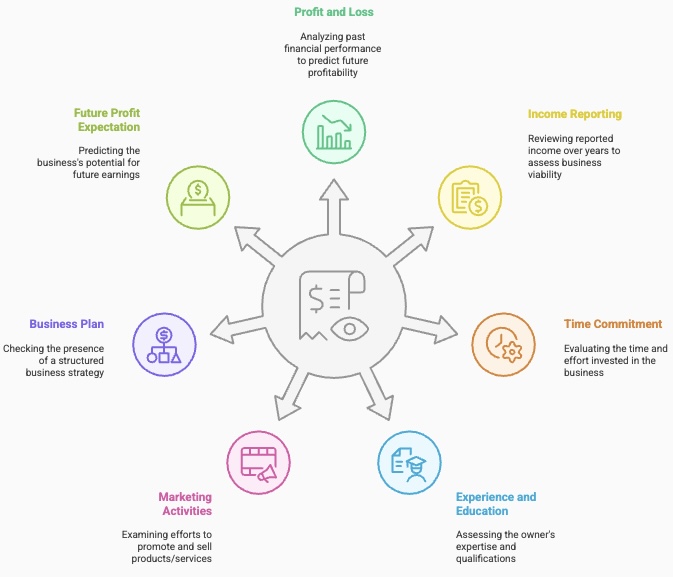
- Past profit and loss experience
- The amount of income reported over multiple years
- Time commitment and effort involved
- Your experience, training, or education in the field
- Whether you actively market and promote your products/services
- Whether you have a business plan
- If the business can reasonably be expected to make a profit in the future
If your hobby is taking up substantial time and resources, the CRA may consider it a business—especially if you are actively scaling, advertising, and reinvesting profits.
However, the distinction isn’t always clear—and CRA looks at multiple factors beyond just whether you made a profit. Misclassification can affect your ability to claim expenses and may increase your audit risk if not properly supported. A quick review can help you assess your position and ensure your reporting aligns with CRA expectations.
How to Report Business Income, Claim Expenses, and Stay GST/HST Compliant in Canada?
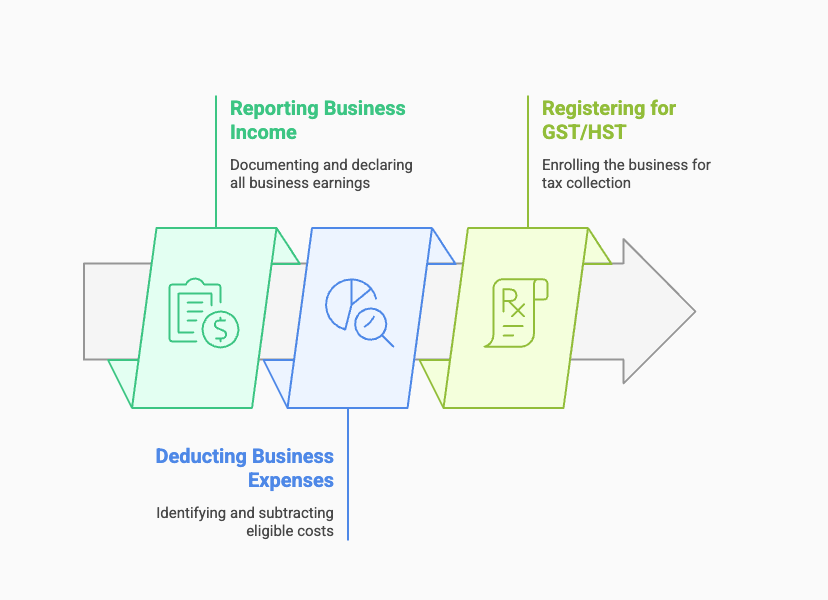
1. Reporting Business Income
Once your hobby transitions into a business, you are legally required to report income. This includes revenue from online sales, craft fairs, social media, or word-of-mouth referrals.
How to Report Business Income:
- Use the T2125 Statement of Business or Professional Activities when filing your personal tax return.
- If your business is registered (sole proprietorship, partnership, or corporation), you may have additional tax filing requirements.
- Income should be reported when earned, not just when payment is received.
2. Deducting Business Expenses
One major tax benefit of running a business is the ability to deduct business-related expenses.
Common deductible business expenses include:
- Supplies & Materials – Costs for goods or services used in your business.
- Advertising & Marketing – Social media ads, business cards, and website costs.
- Office & Home Office Expenses – If you work from home, a portion of rent/utilities may be deductible.
- Professional Fees – Accounting, bookkeeping, and legal services.
- Business-Use Vehicle Expenses – Gas, insurance, and maintenance (pro-rated for business use).
- GST/HST Paid on Expenses – If registered, you can claim Input Tax Credits (ITCs) to recover GST/HST paid on eligible purchases.
3. Registering for and Remitting GST/HST
If your business earns $30,000+ in gross revenue over four consecutive quarters, you must register for a GST/HST number and start charging tax on taxable goods/services.
Steps for GST/HST Compliance:
- Register for a GST/HST Number – Online via the CRA or by phone.
- Charge GST/HST on Sales – The tax rate depends on your province (e.g., 5% in Alberta, 13% in Ontario, 15% in Nova Scotia).
- Track GST/HST Collected and Paid – Use accounting software to track sales tax and claim Input Tax Credits (ITCs).
- File GST/HST Returns on Time – The frequency depends on your revenue (monthly, quarterly, or annually).
- Remit GST/HST to the CRA – Ensure timely payments to avoid penalties.
Conclusion
The line between a business and a hobby isn’t always obvious—but getting it right matters. How your activity is classified affects what expenses you can claim, how your income is taxed, and your overall compliance with CRA requirements. Taking a proactive approach can help you avoid reassessments and ensure your reporting supports your long-term plans.
If you’re unsure how your activity should be treated—or want to strengthen your position—we can help you review your situation and align it with CRA guidelines.